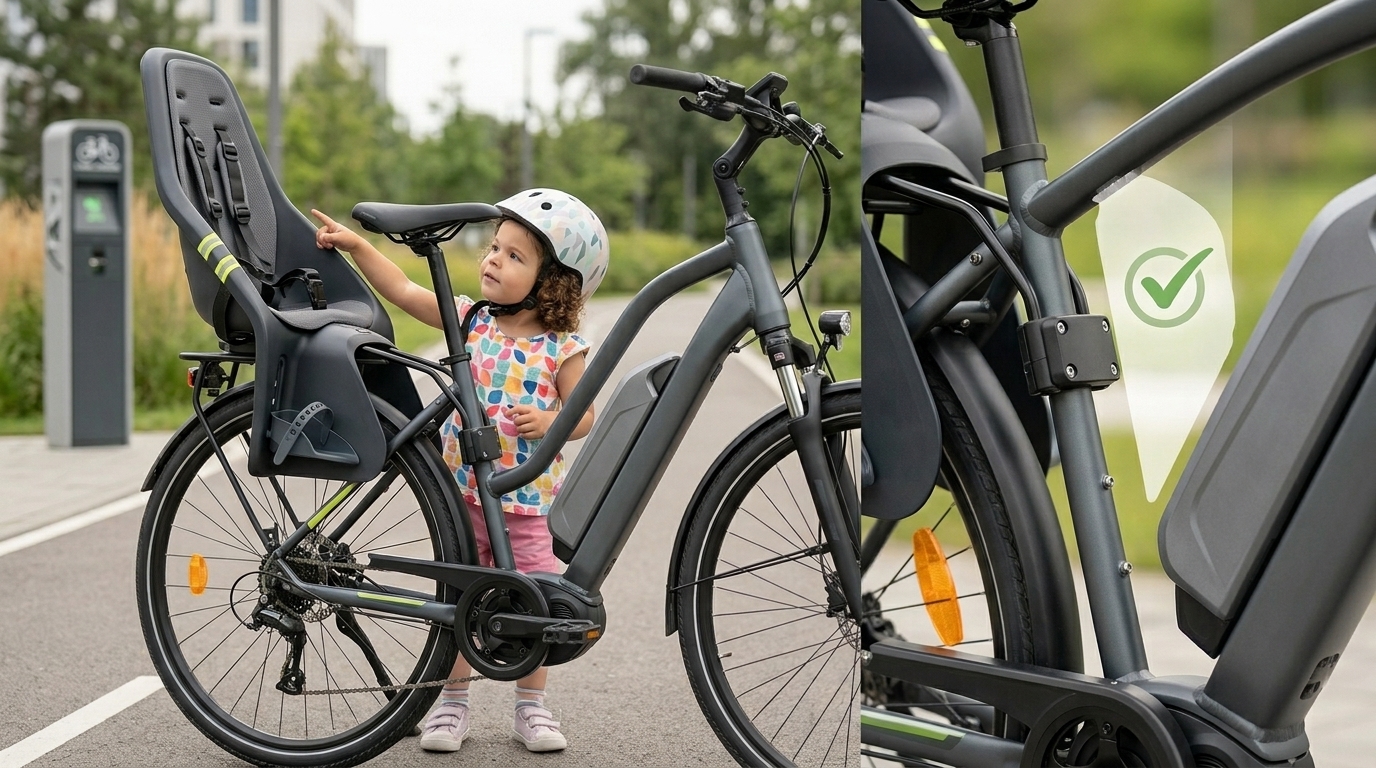


Does California law require helmets for Class 1 and Class 2 e-bikes? Welcome to E-Bike Blog, your leading digital resource for legal frameworks, e-bike infrastructure updates, and safety gear reviews. While our community of readers spans across Texas, New York, Washington, San Francisco, and California, no state has generated more active conversations around micro-mobility rules than the Golden State.
With e-bikes exploding in popularity across coastal highways, mountain paths, and city grid systems from Los Angeles to San Francisco, local law enforcement and state legislators have tightened the rules of the road.
If you own or are planning to buy a slower, more casual electric bicycle, a foundational question naturally arises: Does California law require helmets for Class 1 and Class 2 e-bikes?
The short answer is it depends entirely on your age. If you are under 18 years old, a helmet is strictly mandatory by law on a Class 1 or Class 2 e-bike. However, if you are an adult aged 18 or older, California state law does not legally require you to wear a helmet while operating a Class 1 or Class 2 e-bike.
In this comprehensive, 3,000-word guide, we will break down California’s vehicle codes, examine how Class 1 and Class 2 bikes differ from high-speed Class 3 models, review top-rated protective gear, offer actionable safety tips, and answer your most complex legal questions.
1. Deconstructing California’s E-Bike Classification System
To understand how helmet laws apply to you, you must first know how California law categorizes electric bicycles under the California Vehicle Code (CVC §24016). California recognizes three distinct classes:
- Class 1 E-Bikes: Low-speed, pedal-assist only. The motor provides power only when you are actively pedaling and cuts out completely once you reach 20 mph.
- Class 2 E-Bikes: Low-speed, throttle-assisted. These bikes feature a motor that can propel the bike via a hand throttle (without requiring you to pedal) up to a maximum speed of 20 mph.
- Class 3 E-Bikes: High-speed, pedal-assist only. The motor provides assistance up to 28 mph. (As covered in our previous guides, these carry a universal helmet mandate for all ages).
Both Class 1 and Class 2 e-bikes are capped at a maximum motor-assisted speed of 20 mph. Because their top speed mirrors traditional bicycles, the state treats their helmet requirements much closer to standard bicycle laws.
2. The Golden Rule: Age-Based Helmet Requirements for Class 1 & 2
The legal obligation to wear a helmet on a Class 1 or Class 2 e-bike in California hinges strictly on a single metric: age.
A. Riders Under 18 (Strictly Mandatory)
Under California Vehicle Code Section 21212, any operator or passenger under the age of 18 must wear a properly fitted and fastened bicycle helmet that meets CPSC (Consumer Product Safety Commission) or ASTM standards.
- This law applies universally across public streets, bike paths, multi-use trails, and sidewalks.
- If a minor is caught riding a Class 1 or Class 2 e-bike without a helmet, law enforcement can issue a traffic stop, and parents or legal guardians can ultimately be held financially responsible for the resulting fines.
B. Adults 18 and Older (Legally Optional, But Recommended)
For adults 18 years of age and older, California state law does not mandate helmet use on Class 1 or Class 2 e-bikes.
- You can legally commute to work on a Class 1 pedal-assist cruiser or ride a Class 2 throttle bike down a public bike lane in San Diego or San Francisco without a helmet facing zero legal penalties from the state.
- Important Distinction: While legal, choosing to ride unhelmeted leaves you completely unprotected against traumatic head injury during a crash, and can expose you to comparative negligence arguments if you are involved in an accident with a motor vehicle.
3. Product Reviews: Best Helmets for Class 1 and Class 2 Riders – Does California law require helmets for Class 1 and Class 2 e-bikes?
Even though adults aren’t legally forced to wear a helmet on a Class 1 or Class 2 e-bike, comfort, ventilation, and modern safety tech make wearing one a smart choice. Here are three top-performing helmets suited for everyday riders:
1. The Lightweight Urban Choice: Specialized Align II MIPS
- Key Features: Tri-Fix web splitter, dual-density EPS foam, integrated MIPS layer, and clean styling.
- Why We Love It: The Align II is one of the most comfortable, budget-friendly helmets featuring elite MIPS rotational protection. It doesn’t look bulky, making it ideal for casual Class 1 and Class 2 riders.
- Pros: Exceptional price-to-safety ratio, comfortable fit system, highly breathable.
- Cons: Basic aesthetic without smart tech integrations.
2. The Commuter’s Favorite: Smith Express MIPS
- Key Features: Lightweight in-mold construction, VaporFit adjustable dial system, and optional integrated rear visibility light.
- Why We Love It: Designed with urban commuters in mind, it bridges the gap between sleek bicycle styling and added structural coverage for city e-bike lanes.
- Pros: Lightweight feel, great ventilation, sleek profile.
- Cons: Premium price point compared to entry-level models.
3. The All-Weather Urban Pick: Thule Paramount Commuter Helmet
- Key Features: Superior extended rear coverage, reflective elements for night riding, and integrated visor channels.
- Why We Love It: Perfect for riders navigating dense city traffic who want extra skull coverage at the back and sides of the head.
- Pros: Robust build quality, high-visibility reflective detailing.
- Cons: Slightly warmer on hot summer days.
4. Product Comparison Table
| Helmet Model | Safety Certification | MIPS / Technology Integration | Best Suited For | Price Range |
| Specialized Align II | CPSC / CE | MIPS Rotational Impact System | Everyday Class 1 & 2 Commuters | $ |
| Smith Express MIPS | CPSC / CE | VaporFit & MIPS Integration | Urban Cyclists & Weekend Riders | $$ |
| Thule Paramount | CPSC / CE | Extended Coverage & Reflectors | Daily Commuters Seeking Extra Safety | $$ |
| No Helmet (Adult Class 1/2) | None | None | Legal for 18+ (Not Recommended) | Free |
5. Actionable Safety & Compliance Tips for California Riders
- Verify Your Local Municipal Codes: Remember that while state law allows unhelmeted riding for adults on Class 1 and Class 2 bikes, local city councils, county park boards, or university campuses can enact stricter safety bylaws. Always check local signage.
- Never Skip Minor Compliance: If you let your teenagers ride your Class 2 throttle e-bike, ensure they are strapped into a certified CPSC helmet every single time. Parents face direct liability for juvenile infractions.
- Inspect Your Gear Regularly: Sweat, UV exposure, and minor drops degrade helmet foam over time. Replace any helmet after a severe impact or every 5 to 7 years.
- Prioritize Visibility: Class 1 and Class 2 e-bikes travel up to 20 mph. Pair your helmet with high-lumen blinking red rear lights to ensure drivers see you clearly in urban traffic corridors.
6. Frequently Asked Questions (10 Large FAQs)
1. Can an adult legally ride a Class 1 e-bike in California without a helmet?
Yes. Adults aged 18 and older are legally permitted to operate a Class 1 pedal-assist e-bike without a helmet under California state law.
2. Are adults required to wear a helmet on a Class 2 throttle e-bike?
No. State vehicle code treats Class 1 and Class 2 e-bikes identically regarding adult helmet requirements; adults 18+ are not legally mandated to wear one.
3. What happens if a minor is caught riding a Class 1 e-bike without a helmet?
Law enforcement can pull the minor over and issue a traffic citation. Parents or legal guardians are typically held responsible for paying the fine (which can range from $25 to over $100 with local assessments).
4. Do I need a driver’s license or DMV registration for a Class 1 or Class 2 e-bike in California?
No. Standard California e-bikes do not require a driver’s license, vehicle registration, license plate, or mandatory insurance, provided they stay within the 750-watt power limit and class speed caps.
5. Can local California cities enforce stricter helmet laws than the state?
Yes. While state law sets the baseline framework, local municipalities, county parks, and school districts possess the legal authority to enact stricter micro-mobility safety rules, such as universal helmet mandates for all park visitors or campus riders.
6. Are skateboard or BMX helmets legally acceptable for minors on e-bikes?
Yes, as long as the helmet displays an official CPSC safety certification sticker on the interior lining. Uncertified fashion caps, novelty hats, or unrated skate helmets do not comply with California law.
7. Does the adult helmet exemption apply to visitors from out of state?
Yes. Anyone riding within California’s borders must follow California traffic laws. An adult tourist visiting from another state can ride a Class 1 e-bike helmet-free legally, just like a resident.
8. What is the difference in helmet rules between Class 2 and Class 3 e-bikes?
Class 2 e-bikes (throttle-assisted up to 20 mph) do not require helmets for adults. Class 3 e-bikes (pedal-assisted up to 28 mph) require a certified helmet for every single rider regardless of age.
9. Will a helmet violation affect my car insurance rates?
A bicycle or e-bike helmet ticket is processed as a non-moving bicycle infraction and typically does not report as a points-accruing motor vehicle violation on your DMV record, meaning it usually won’t spike auto insurance rates. However, civil liability during a crash is an entirely different matter.
10. Even if it’s legal for adults, why should I wear a helmet on a Class 1 or 2 e-bike?
Traveling at 20 mph exposes you to hard pavement, motor vehicle traffic, and unexpected road hazards. Wearing a certified MIPS helmet dramatically reduces your risk of severe traumatic brain injury, making it the safest choice regardless of what the statute book permits.
Conclusion
Navigating California’s e-bike laws comes down to checking two things: the class of your bike and your age. For Class 1 and Class 2 e-bikes, adults 18 and older enjoy the legal freedom to ride without a helmet, while minors under 18 must always stay strapped into a certified CPSC helmet.
Regardless of what the law strictly mandates for adults, equipping yourself with a modern, high-visibility helmet is the smartest way to protect your long-term health on the road.