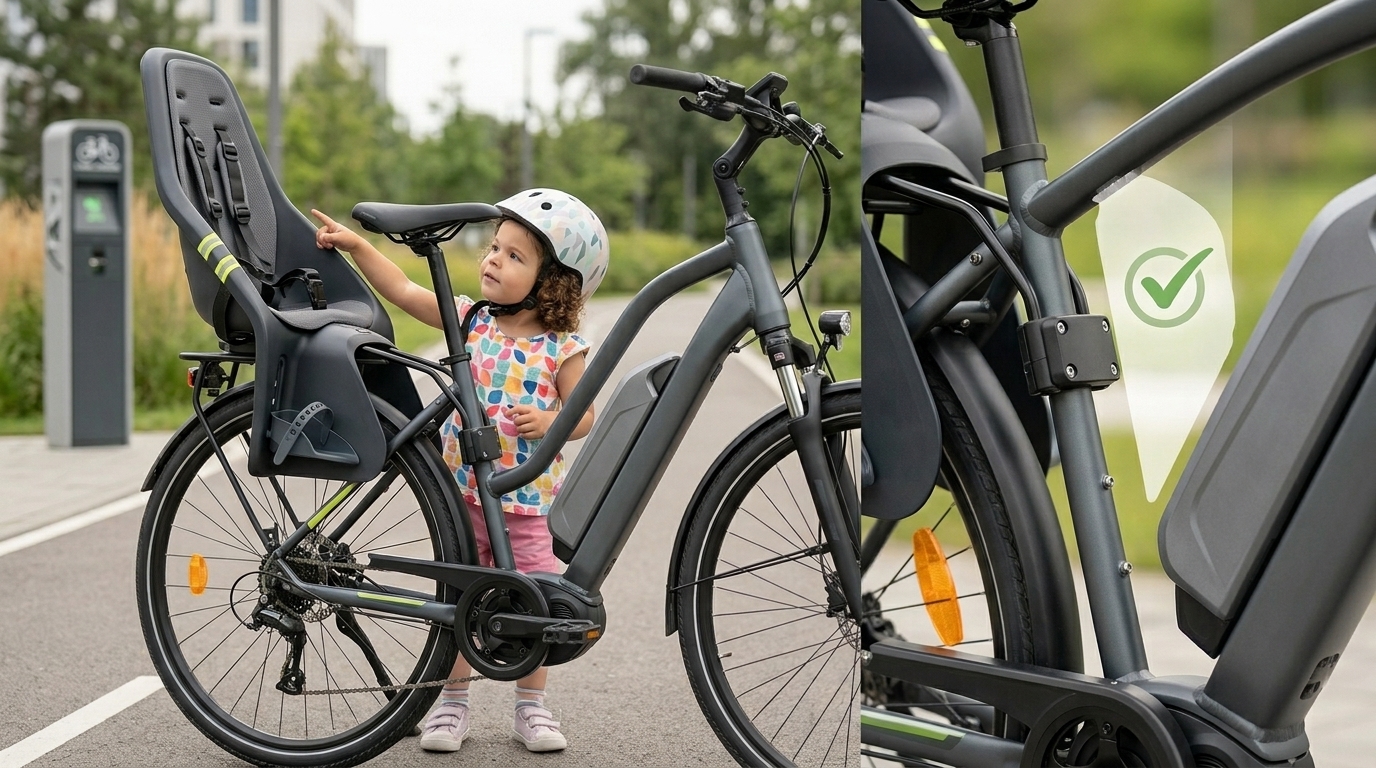


Do I need a special helmet for my toddler on an e-bike? As electric bikes rapidly replace traditional cars for school runs, weekend grocery trips, and family recreational rides across San Francisco, New York, Seattle, Austin, and Los Angeles, more parents are sharing the joy of cycling with their youngest family members. Whether your toddler is riding up front in a frame-mounted seat or cruising behind you on a heavy-duty cargo e-bike, ensuring their safety is paramount.
When outfitting your child, a vital question often arises: Do I need a special helmet for my toddler on an e-bike, or will any standard toddler bicycle helmet do?
The short answer is: While standard bicycle helmets meet baseline legal requirements for young passengers, specialized e-bike certifications (such as the NTA-8776 standard) and multi-impact designs offer significantly better protection against the unique weight, speed, and momentum dynamics of electric bikes.
In this comprehensive, data-driven, extra-large optimized guide tailored for ebikeblog.com, we will dissect helmet safety standards, explore why e-bike physics demand more from protective gear, review top toddler and youth helmets, and provide expert tips for family e-biking.
1. The Physics of E-Bikes vs. Traditional Bicycles: Why Helmets Matter
To understand whether your toddler needs specialized head protection, you must first understand how electric bikes change the physics of a crash.
- Mass and Momentum: An electric bike is significantly heavier than a standard bicycle. A typical commuter or cargo e-bike weighs between 50 and 75 lbs, compared to a 25-lb acoustic bike. When you combine the weight of the e-bike, the adult rider, a child seat, and a 30-lb toddler, total system momentum increases dramatically.
- Higher Average Speeds: E-bikes make accelerating, climbing hills, and maintaining higher average speeds (15 to 20 mph) effortless, even when hauling precious cargo.
- The Crash Consequence: If an e-bike tips over or stops abruptly due to a hazard, the kinetic energy transferred in an impact is substantially higher than a low-speed tip-over on a standard children’s push bike. Standard bicycle helmets are lab-tested for lower-speed, unpowered impacts, leaving a performance gap when exposed to heavier motor-assisted vehicle accidents.
2. Breaking Down Helmet Safety Standards: CPSC vs. NTA-8776
When shopping for a toddler helmet, you will encounter various acronyms and safety certifications. Knowing what they mean can save your child’s life:
A. U.S. CPSC Standard (The Baseline)
In the United States, all bicycle helmets sold must meet the Consumer Product Safety Commission (CPSC) 16 CFR Part 1203 safety standard.
- What It Covers: Rigorous testing for impact attenuation, strap retention strength, and peripheral vision clearance designed for traditional bicycle crashes.
- The Limitation: It is engineered for unpowered human speeds, not heavier motorized e-bike crashes.
B. The NTA-8776 Standard (The E-Bike Gold Standard)
Introduced in the Netherlands specifically to address speed pedelecs and electric bicycles, the NTA-8776 is the world’s first and only dedicated e-bike helmet certification.
- Enhanced Impact Absorption: Tested to handle higher-energy collisions and speeds up to 28 mph.
- Extended Head Coverage: NTA-8776 helmets feature a deeper shell design that provides significantly more coverage around the temples and the back of the head—the areas most vulnerable during a fall from a moving bike.
- The Catch for Toddlers: True NTA-8776 certified helmets are primarily manufactured for older youth, teens, and adults. Finding a certified e-bike helmet scaled down to fit a 1-to-3-year-old toddler’s head can be challenging, making high-end CPSC-certified multi-sport helmets with extended rear coverage the next best choice.
3. Product Reviews: Top Helmets for Toddlers and Young Passengers – Do I need a special helmet for my toddler on an e-bike?
To help you choose the safest head protection for your young passenger, we evaluated leading youth and toddler helmet options.
1. Thousand Jr. Kids Helmet (Best Style & Extended Coverage)
- Safety Certifications: CPSC and ASTM F1492 (Skate) certified
- Review: Thousand is famous for its vintage aesthetic, but the “Jr.” line is engineered with serious safety in mind. Unlike traditional bike helmets that sit high, the Thousand Jr. features a rounded skate-style shell profile that extends lower down the back of the head, offering crucial occipital protection for toddlers sitting passively in a rear e-bike seat. It also features a convenient dial-fit retention system for micro-adjustments.
2. Giro Scamp MIPS (Best Lightweight Toddler Fit)
- Safety Certifications: CPSC Bicycle compliant
- Review: Designed specifically for the smallest riders (fitting head sizes down to 45 cm, suitable for children around 1 year old), the Giro Scamp is exceptionally lightweight so it won’t strain a toddler’s developing neck muscles. The inclusion of the MIPS (Multi-directional Impact Protection System) layer helps absorb rotational forces during an angled crash.
3. Bern Nina 2.0 with MIPS (Best All-Season Youth Protection)
- Safety Certifications: CPSC, EN1078
- Review: A stellar multi-sport helmet featuring an EZ-fit dial system and thick, durable ABS shell construction. Because toddlers sitting in bike seats aren’t pedaling and generating body heat the way riders do, the Bern Nina provides robust, full-coverage protection while maintaining comfortable ventilation channels.
4. Comprehensive Comparison Table: Standard vs. E-Bike Specific Safety Features
| Helmet Feature | Standard CPSC Toddler Helmet | Premium Multi-Sport Toddler Helmet (e.g., Thousand Jr.) | Dedicated E-Bike Certified Helmet (NTA-8776) |
| Primary Testing Speed | Standard unpowered bicycle velocity | Higher-energy multi-impact testing | Up to 28 mph high-velocity impact |
| Head Coverage Zone | Standard crown and upper brow | Extended rear and temple coverage | Maximum coverage (temples, base of skull) |
| MIPS Technology Availability | Optional | Frequently Available | Standard on most premium models |
| Toddler Sizing Availability | High (Fits 1-year-olds easily) | High (Fits ages 2 to 5) | Very Low (Usually starts at youth/adult sizes) |
| Suitability for E-Bike Passengers | Acceptable baseline | Recommended (Better rear skull coverage) | Ideal (If available in correct size) |
5. Essential Rules for Fitting a Toddler E-Bike Helmet
Even the most advanced, expensive helmet offers zero protection if it isn’t fitted correctly. Follow the golden rules of helmet fitting before every ride:
- The Two-Finger Rule: The helmet should sit level on your toddler’s head, resting snugly just two finger-widths above their eyebrows. If it tilts back to expose their forehead, it leaves the front brain unprotected.
- The V-Shape Strap Check: The side straps should form a neat “V” shape directly underneath each of your child’s earlobes.
- The Chin-Strap Tightness Test: Fasten the buckle under their chin. You should be able to slide no more than one or two fingers between the strap and their skin. If the helmet can roll forward off their head or slide side-to-side, it is too loose.
- Zero Slack for Passengers: Toddlers sitting in rear or front child seats often slouch or fall asleep. If a helmet is too loose, their head can slump forward, restricting their airway. A snug, lightweight fit prevents head-bobbing fatigue.
6. Expert Tips for Family E-Biking with Toddlers
Transporting toddlers on an electric motor-assisted bicycle requires extra caution. Keep these safety tips in mind:
- Prioritize MIPS Technology: Always look for the yellow MIPS sticker. In an e-bike collision, rotational brain injuries are common; MIPS technology redirects those twisting forces away from the skull.
- Never Buy a Used or Second-Hand Helmet: You never know if a used helmet has been compromised in an unrecorded crash or degraded by UV sunlight and sweat. Always buy new.
- Replace After Any Impact: If your e-bike tips over while parked and your child’s helmet hits the pavement—even with minor visible damage—the internal EPS foam has compressed. Discard and replace it immediately.
- Dress Comfortably for Passive Riding: Remember that your toddler is sitting still while you are working up a sweat pedaling. Dress them in warm layers during cool weather rides in New York or Seattle, as wind chill hits stationary passengers harder.
7. Frequently Asked Questions (FAQs)
1. Do I need a special helmet for my toddler on an e-bike?
While standard CPSC-certified bicycle helmets meet legal minimums, pediatric safety advocates strongly recommend upgrading to a multi-sport helmet with extended rear skull coverage and MIPS technology to handle the higher speeds and weight of an e-bike.
2. Are there NTA-8776 e-bike certified helmets made for toddlers?
True NTA-8776 certified e-bike helmets are rarely manufactured in sizes small enough for toddlers (ages 1 to 3), as they are engineered for older youth and adults. For toddlers, a high-end skate-style CPSC/ASTM-certified helmet with extended rear coverage is the best alternative.
3. What does MIPS mean on a toddler helmet?
MIPS stands for Multi-directional Impact Protection System. It is a low-friction inner layer designed to rotate slightly inside the helmet during an angled impact, dramatically reducing rotational forces transferred to the brain.
4. What is the minimum age for a child to wear a helmet on an e-bike?
Most manufacturers and pediatricians recommend that a child be at least 9 to 12 months old before riding in a bike seat, ensuring their neck muscles are strong enough to support the weight of a helmet safely.
5. Can my toddler use a skateboard helmet on an e-bike?
Many skate-style helmets carry both CPSC bicycle and ASTM multi-impact certifications. These are actually fantastic for toddlers on e-bikes because they offer lower-profile coverage extending down the back of the neck. Never use a cheap toy helmet (like a plastic character helmet).
6. How often should I replace my toddler’s bicycle helmet?
You should replace a child’s helmet every 3 to 5 years due to normal material wear, or immediately after any crash, drop, or impact. Furthermore, toddlers outgrow helmets rapidly.
7. Why does my toddler’s head slump forward in their bike seat?
If the helmet is too heavy or poorly fitted, or if the child falls asleep, gravity pulls the helmet forward. Look for lightweight toddler helmets with flat-back profiles designed to accommodate headrests in child seats without pushing the head forward.
8. Are full-face helmets necessary for toddlers on e-bikes?
Full-face helmets are generally unnecessary for casual passenger seating unless you are engaging in aggressive off-road e-mountain biking, where a full-face youth helmet provides extra jaw protection.
9. What should I check before every family e-bike ride?
Check that your toddler’s helmet sits two finger-widths above the eyebrows, the chin strap is snug (one finger clearance), the buckle clicks securely, and the retention dial at the back is tightened.
10. Where can I find more family e-bike safety guides and gear reviews?
You can explore comprehensive product reviews, legal updates, and expert safety checklists right here at ebikeblog.com.
8. Conclusion
When securing your youngest family member for a ride on an electric bike across California, New York, Texas, Washington, or San Francisco, cutting corners on safety gear is never an option. While true NTA-8776 e-bike helmets are hard to find in toddler sizes, investing in a premium, multi-impact, CPSC/ASTM-certified toddler helmet featuring MIPS technology and extended rear skull coverage provides vital protection against the unique dynamics of motor-assisted travel.
By prioritizing correct fit, rigorous safety standards, and defensive family riding habits, you can enjoy the freedom of electric biking with total peace of mind. Discover more expert family cycling insights and gear reviews today on ebikeblog.com!